
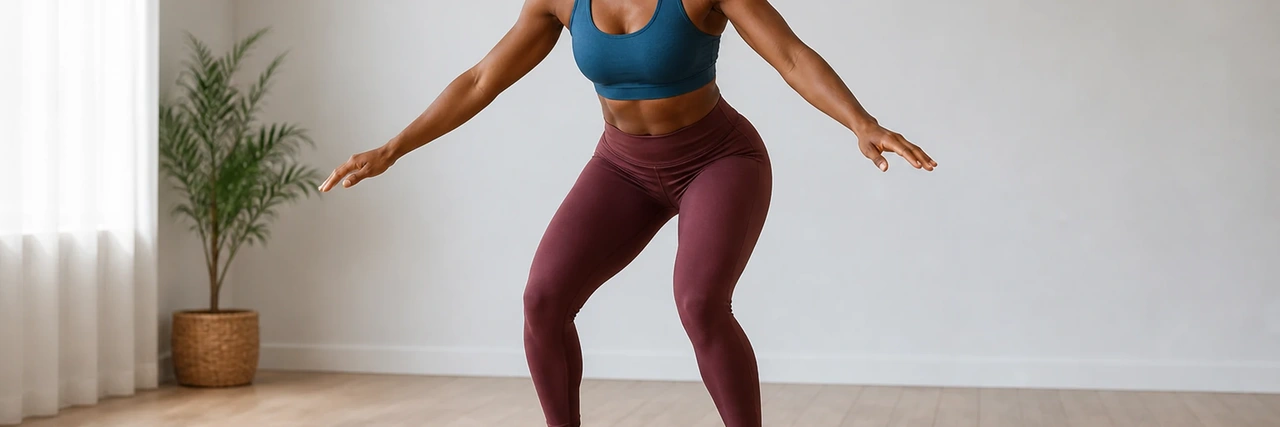
Best Balance Boards Compared for 2026: 5 Top Picks for Home Training
Best balance boards comparison covering five rolling, wobble, rocker and dome trainers. Find the right fit for your goals and read the guide today
Five balance boards and trainers compared on style, size and difficulty so you can pick the right one for core and balance work at home
Choosing a balance board looks simple until you notice that the category covers very different tools. Some roll, some wobble in every direction, some rock along one line and some are inflatable domes. Pick the wrong style and the board is either too easy to be useful or too hard to use at all.
This guide compares five popular balance trainers on four criteria: the type of movement the board demands, the size of the standing surface, the build materials, and how clearly the capacity and key specs are reported by sellers. Only figures that could be confirmed are used, and where listings disagree that is pointed out rather than guessed.
Below you will find an overview of each board with its strengths and honest trade-offs, a clear best-for and not-for summary, a short conclusion for each, and answers to common buyer questions, so you can match a board to your space, experience level and goals.
| Product | Amazon rating | Best for | Link |
|---|---|---|---|
| Revbalance 101 v2 Balance Board Sports Trainer ★ | ★ 4.8/5 (1,864) | Athletes wanting a rolling challenge | View → |
| The Original Indo Board Balance Board Trainer for Core Strength and Athletic Performance | ★ 4.8/5 (883) | Surf-style rolling practice | View → |
| Fitterfirst Professional Balance Board 16 Inch Wobble Board | ★ 4.6/5 (391) | Compact wobble board drills | View → |
| Fitterfirst Professional Rocker Board 20 Inch | ★ 4.8/5 (818) | Beginners wanting a wide deck | View → |
| BOSU Pro Balance Half-Ball Trainer Stability Dome with Pump 26 Inch | ★ 4.6/5 (3,562) | Strength and balance variety | View → |
Revbalance 101 v2 Balance Board Sports Trainer
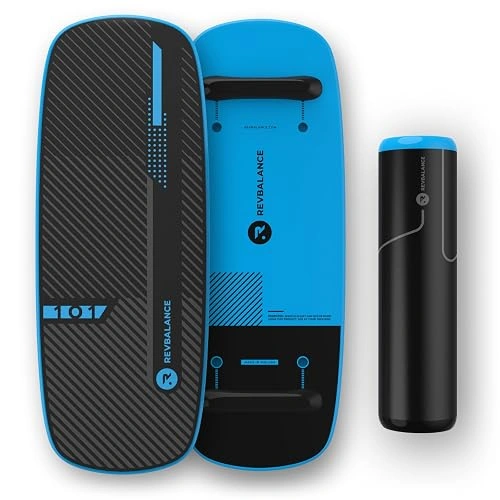
The Revbalance 101 v2 is a rolling balance board from Revolution, sold through Rogue. A flat deck sits on a separate roller, so the rider has to control movement in two directions at once. Rogue lists the deck at 30 by 12 inches and the capacity at 400 pounds, which is a higher figure than most other boards in this group. It suits athletes who want a sport-style challenge, since rolling boards are often used for surf, skate and snow sport cross-training, and it also works for adults who want a harder core exercise than a simple wobble board.
The trade-offs are practical. A rolling design has a steeper learning curve, so buyers often mention keeping a wall or a doorframe nearby while learning. It also needs open floor space because the roller can travel away from the board. Seller listings disagree on the board’s own weight, so check that figure if you plan to carry it often.
The Original Indo Board Balance Board Trainer for Core Strength and Athletic Performance
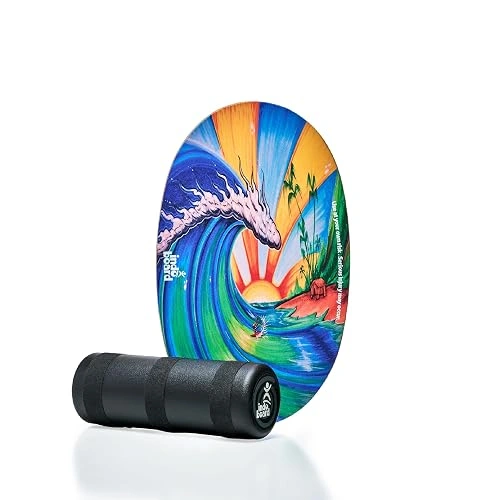
The Original Indo Board is a roller-style balance trainer that pairs an oval plywood deck with a plastic roller. The brand also offers an inflatable cushion for a softer, less rolling setup. Indo lists the deck at 30 by 18 inches, made from 11/16 inch Baltic birch plywood with a non-slip surface, and the roller at 6.5 inches in diameter with three strips of grip tape. The 14 inch cushion is mouth-inflatable and adjustable. It suits people who want a surf-style rolling challenge with a wider deck than the Revbalance, which gives a more settled stance.
Weight limits are quoted inconsistently across sellers, so confirm the figure on the listing before buying. Also check which components come in the bundle you choose, because the deck, roller and cushion are sold in several combinations. As with any rolling board it takes practice and a clear patch of floor.
Fitterfirst Professional Balance Board 16 Inch Wobble Board
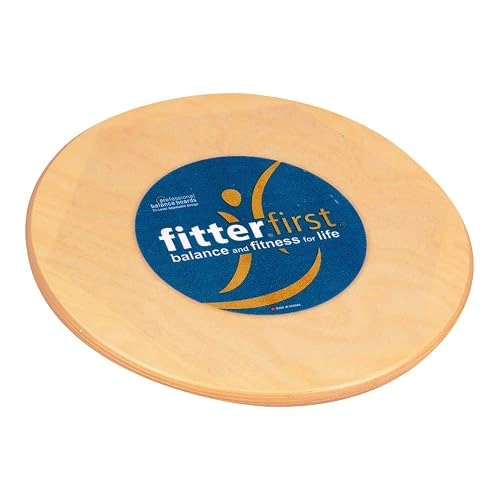
The Fitterfirst Professional Balance Board is a round wobble board 16 inches across, made from three-quarter inch birch plywood with a non-slip top surface. Retail listings describe adjustable tilt angles of 15, 17 and 20 degrees, and one retailer calls it the more advanced of the brand’s round sizes because of the steeper angles and narrower stance. It suits people who want a compact board for balance drills, bodyweight exercises with added instability, or standing practice, and it takes little storage room.
The trade-offs are that it has no rolling element, so it feels less sport-specific than the roller boards, and the narrower stance leaves less room for foot placement. Sellers quote different weight capacities, ranging from 300 to 500 pounds, so check the listing you buy from instead of relying on a single number.
Fitterfirst Professional Rocker Board 20 Inch
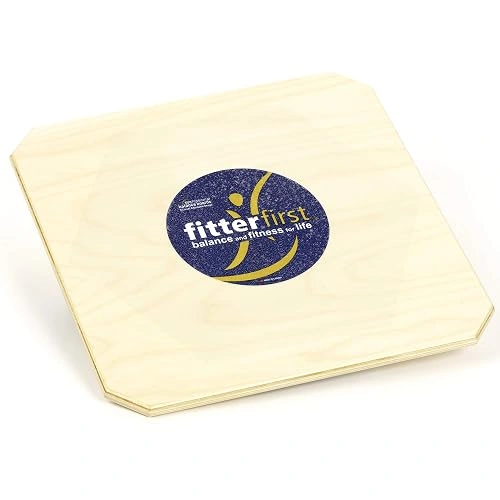
The Fitterfirst Professional Rocker Board 20 is a rocker board, which tilts rather than rolls. Listings give the deck as 20 by 20 inches, made from Baltic birch plywood with a non-slip surface, and one retailer lists adjustable tilt angles of 10, 12 and 15 degrees. A 350 pound capacity is the figure most sellers report. The wide deck gives plenty of room for foot placement, which makes it a gentler starting point than a roller board or a small wobble board.
It suits beginners, people with larger feet, and anyone who wants a stable surface for squats, calf work or standing balance drills. The trade-offs are a larger footprint to store than the 16 inch board and a lower ceiling on difficulty, so advanced athletes may outgrow it. Height and weight figures differ between listings, so verify those before ordering if you have a size limit.
BOSU Pro Balance Half-Ball Trainer Stability Dome with Pump 26 Inch
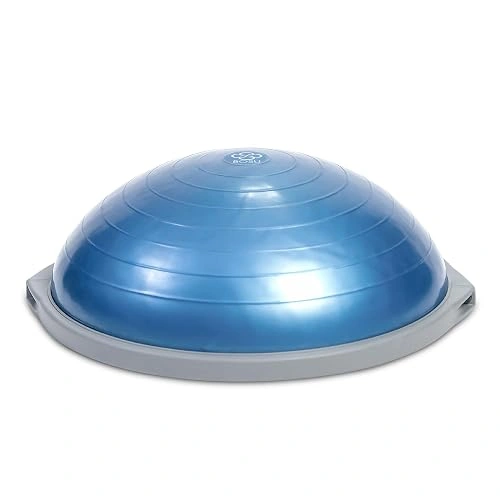
The BOSU Pro Balance Trainer is a 26 inch inflatable dome with a flat platform on the underside, supplied with a pump. Most listings give a diameter of 26 inches, or 65 cm, and a 350 pound maximum user weight. Used dome side up it supports standing balance drills, squats and lunges. Flipped over, the platform side can be used for push-ups and other floor-based work. It suits people who want one versatile tool for both strength and balance exercises rather than a board that is only for standing.
The trade-offs are bulk and setup. It takes more storage space than any of the boards, and the inflation level needs adjusting by pump to change how unstable it feels. Retailer listings differ on its height, weight and the type of pump included, so check those details before you buy.
Conclusions
The Revbalance 101 v2 is the best overall choice here for anyone who wants a real balance challenge. Its 30 by 12 inch deck and reported 400 pound capacity stand out, though it asks for patience, open floor space and a spot to steady yourself while learning. … read more
The Original Indo Board is a strong pick if you want a wider rolling deck at 30 by 18 inches. Confirm the weight limit and the exact bundle contents before ordering, since sellers list them differently, and plan on a learning period. … read more
The Fitterfirst Professional Balance Board is a good compact wobble board for drills and standing practice. Its 16 inch diameter and steeper tilt options make it more demanding than a wider deck, but the weight capacity varies by seller, so check it. … read more
The Fitterfirst Professional Rocker Board 20 is the friendliest starting point in this group thanks to its 20 by 20 inch deck and tilting action. It is less challenging over time, so those chasing sport-style difficulty may prefer a rolling board. … read more
The BOSU Pro Balance Trainer is the most versatile option, working dome side up for balance and strength drills or flipped for floor exercises. It is bulky, needs inflation adjustments, and listing details on height and weight vary, so verify them. … read more
Frequently Asked Questions
What is the difference between a wobble board and a rocker board?
A wobble board is round and can tilt in every direction, like the 16 inch Fitterfirst board. A rocker board tilts along one line, like the 20 inch Fitterfirst model, which usually makes it easier for beginners to control.
Is a rolling balance board harder to use than a wobble board?
Generally yes. A rolling board such as the Revbalance or Indo Board moves on a roller, so you control sliding as well as tilt. Buyers often mention needing a wall or doorframe nearby while learning, plus clear floor space.
Which balance board suits a complete beginner best?
The 20 by 20 inch Fitterfirst Rocker Board is the gentlest starting point here, because the wide deck gives room for foot placement and it tilts instead of rolling. The BOSU dome is another approachable option for supported standing drills.
Can I use a BOSU trainer for more than standing balance work?
Yes. Used dome side up it supports balance drills, squats and lunges, and flipped over the flat platform can be used for push-ups and other floor-based exercises. It comes with a pump so you can adjust inflation.
How do I check the weight limit of a balance board?
Look at the specific listing, since sellers often disagree. The Revbalance is reported at 400 pounds and the BOSU at 350, but the Fitterfirst 16 inch board is quoted anywhere from 300 to 500, so confirm before buying.