

Best Heart Rate Monitors Compared for 2026: 5 Top Picks for Training
Best heart rate monitors compared for training: five chest straps and armbands judged on battery, connectivity and fit. Find your match today
Five chest straps and armbands compared on connectivity, battery life and comfort so you can pick the right sensor for your training
A wrist sensor can drift or lag when your effort changes quickly, which is why many athletes add a dedicated heart rate monitor to their training. The catch is that chest straps and armbands differ a lot in battery type, connectivity, memory and comfort, and the spec sheets do not make the differences obvious.
This guide compares five heart rate monitors, four chest straps and one optical armband, using published specifications. The criteria are connectivity with watches, bike computers and phones, battery life and how the power source works, extra features such as onboard memory or running data, and wearing comfort for long sessions.
Below you will find an overview of each model with its strengths and honest trade-offs, who it suits and who should skip it, a short conclusion for each, the overall pick with the reason, and answers to common buyer questions.
| Product | Amazon rating | Best for | Link |
|---|---|---|---|
| Polar H10 Heart Rate Monitor Chest Strap ANT+ Bluetooth ★ | ★ 4.1/5 (27,446) | All-round training compatibility | View → |
| Garmin HRM Pro Plus Premium Chest Strap Heart Rate Monitor | ★ 4.6/5 (7,909) | Running dynamics and triathlon | View → |
| Wahoo TICKR Heart Rate Monitor Chest Strap Bluetooth ANT+ | ★ 4.1/5 (5,434) | Multi-app indoor training | View → |
| Polar H9 Heart Rate Sensor Chest Strap Bluetooth ANT+ | ★ 4.0/5 (10,278) | Simple live heart rate | View → |
| Polar Verity Sense Optical Heart Rate Monitor Armband ANT+ Dual Bluetooth | ★ 3.8/5 (4,432) | Strap-averse steady cardio | View → |
Polar H10 Heart Rate Monitor Chest Strap ANT+ Bluetooth
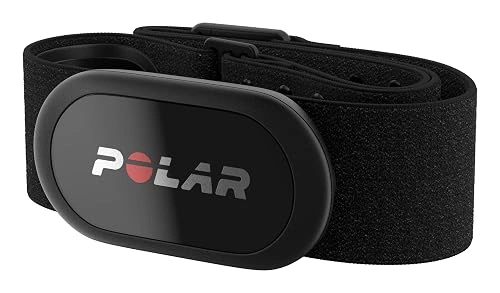
The Polar H10 is a chest strap sensor that sends heart rate data over Bluetooth and ANT+, so it pairs with sports watches, bike computers, phones and training apps. It also transmits over 5 kHz, which some gym equipment can read, and Polar lists water resistance up to 30 meters. Battery life is stated at up to 400 hours, which is long for a daily training tool.
The sensor can store one training session in its own memory, useful when you want to record a workout without a phone or watch nearby. It suits runners, cyclists, gym users and team athletes who want a widely compatible strap that works with almost any device. The trade-offs are that the memory holds only a single session and that it offers no running dynamics, so anyone wanting extra running metrics should look at the Garmin option further down.
Garmin HRM Pro Plus Premium Chest Strap Heart Rate Monitor
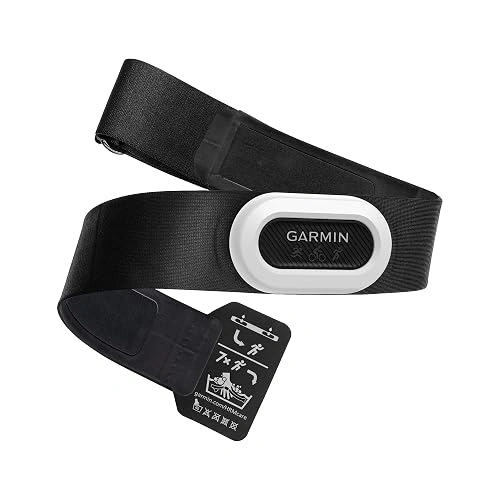
The Garmin HRM Pro Plus is the feature-heavy option in this group. Alongside live heart rate it supports running dynamics when paired with a compatible Garmin watch, including metrics such as vertical oscillation, ground contact time and stride length. It can also record data in its own storage and broadcast to more than one device at once, which suits athletes who train with a watch and a bike computer or app together.
It runs on a CR2032 coin cell. Retailer listings quote up to 12 months at one hour of use per day, although some buyers report a shorter life with frequent training. It suits serious runners and triathletes who want the extra data and offline recording. The trade-off is that you pay for features you will not use if you only need heart rate, and the running metrics depend on owning a compatible Garmin watch.
Wahoo TICKR Heart Rate Monitor Chest Strap Bluetooth ANT+
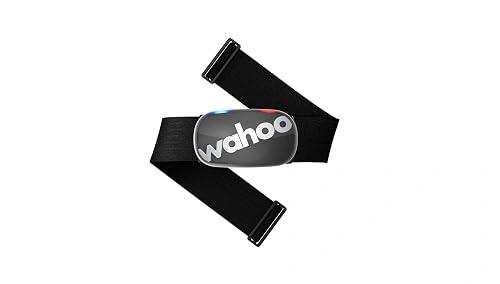
The Wahoo TICKR is a compact chest strap pod that uses Bluetooth and ANT+ together. Wahoo specifies support for up to three simultaneous Bluetooth connections, so you can feed a watch, a phone app and a trainer app at the same time. Two LEDs on the pod show whether it is searching, connected or reading your heart rate, which makes pairing easy to check without a screen.
Power comes from a single CR2032 coin cell, and Wahoo claims about 500 hours of use, the longest stated figure in this comparison. It suits indoor cyclists and gym users who run several apps at once, and anyone wanting a long battery interval. The trade-offs are that the LEDs are the only on-device feedback and that this is a plain broadcaster, so you will not get onboard session storage or running dynamics from it.
Polar H9 Heart Rate Sensor Chest Strap Bluetooth ANT+
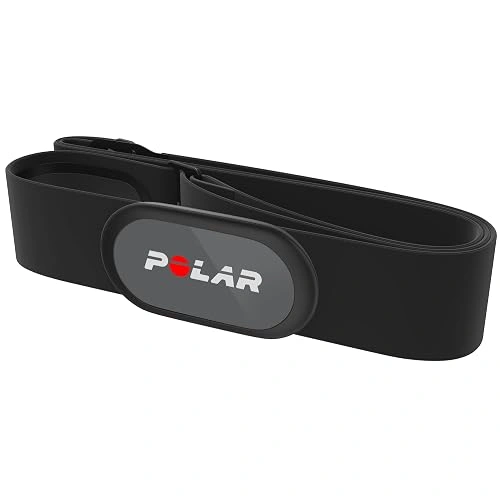
The Polar H9 is a chest strap sensor that broadcasts heart rate over Bluetooth and ANT+, so it connects to sports watches, bike computers, phones and many gym machines. Polar lists it as water resistant to 30 meters, and it uses a user-replaceable coin cell battery rather than a charger, so there is nothing to plug in between sessions.
It is the simpler sibling of the H10. It sends live heart rate to a paired device but does not store a workout in its own memory, so you need a watch or phone nearby to record a session. That makes it a sensible fit for gym users, cyclists and runners who want dependable live data without paying for extra features. Anyone who wants onboard recording or a higher level of accuracy detail should look at the H10 instead.
Polar Verity Sense Optical Heart Rate Monitor Armband ANT+ Dual Bluetooth
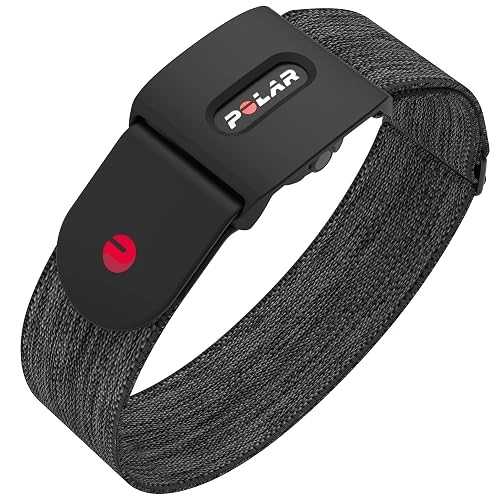
The Polar Verity Sense is an optical armband that reads heart rate from the forearm or upper arm and sends it over Bluetooth and ANT+, with support for two simultaneous Bluetooth connections. It is aimed at people who find chest straps uncomfortable or who simply dislike wearing one, and it is also used for swimming, where a strap can slip.
It has a rechargeable battery that needs periodic charging rather than a coin cell swap, and it can store sessions in its own memory so you can train without a phone or watch. Optical sensors can be affected by arm movement, so a chest strap generally remains the choice when you do hard intervals. It suits steady-state cardio, cycling, swimming and walking where comfort matters most. Anyone who wants the most dependable response to fast changes should pick one of the chest straps.
Conclusions
The Polar H10 is the strongest all-round choice here. It connects over Bluetooth and ANT+, adds 5 kHz transmission, offers up to 400 hours of stated battery life and can store a session. Pick it if you want one strap that works with nearly everything you own. … read more
The Garmin HRM Pro Plus fits runners and triathletes who want running dynamics, onboard storage and multi-device broadcasting. It is more than most people need, and the running metrics require a compatible Garmin watch, so skip it if you only want heart rate. … read more
The Wahoo TICKR suits people who connect several apps at once, thanks to support for up to three Bluetooth connections plus ANT+. With a claimed 500 hours from a coin cell it lasts long between swaps, but it offers no memory or running metrics. … read more
The Polar H9 is a straightforward pick for anyone who wants a Bluetooth and ANT+ chest strap with a replaceable coin cell and 30 meter water resistance. It does not store workouts, so choose the H10 if you want onboard memory. … read more
The Polar Verity Sense is the comfort-first option for people who dislike chest straps. It is a rechargeable optical armband with onboard memory and dual Bluetooth. It is best for steady cardio, while interval-heavy athletes are better served by a chest strap. … read more
Frequently Asked Questions
Is a chest strap better than an armband for interval training?
Chest straps read your heart rate at the torso and are generally preferred for fast changes in effort, which is why they dominate this guide. An optical armband like the Polar Verity Sense is more comfortable but can be affected by arm movement during hard intervals.
What is the difference between Bluetooth and ANT+ on a heart rate monitor?
Bluetooth connects to phones, tablets and many apps, while ANT+ is used by many sports watches, bike computers and gym machines. All five monitors in this guide support both, so they work with a wide range of devices.
Which heart rate monitor has the longest battery life?
On stated figures, the Wahoo TICKR claims about 500 hours and the Polar H10 up to 400 hours, both from coin cells. The Garmin HRM Pro Plus is quoted at up to 12 months at one hour of use per day, while the rechargeable Verity Sense needs periodic charging.
Do I need the Garmin HRM Pro Plus for running dynamics?
Yes, among these five it is the one that supports running dynamics such as vertical oscillation, ground contact time and stride length. You also need a compatible Garmin watch to display them. The other four sensors do not offer these metrics.
Can a heart rate monitor record a workout without my phone or watch?
Some can. The Polar H10 stores a single session and the Garmin HRM Pro Plus has onboard storage, while the Polar Verity Sense also records to its own memory. The Polar H9 and Wahoo TICKR only broadcast live data to a paired device.