

Best Running Hydration Vests Compared for 2026: 5 Top Picks for Long Runs
Best running hydration vests compared for long runs and trail days: capacity, fluid system and fit across 5 picks. Read the comparison and choose yours.
5 running hydration vests compared on capacity, fluid system and fit, so you can pick the right one for your distance
Carrying water on a long run is a balancing act. A handheld bottle tires your arm, a belt can bounce, and a poorly fitted pack rubs and sloshes by the second hour. A running vest spreads the load across your chest and back, but the choices on offer vary a lot in capacity, fluid system and storage layout.
This guide compares five running hydration vests on four criteria: how much fluid they carry and in what form (bladder or flasks), how much gear space they offer, how adjustable the fit is, and how easy it is to reach drinks and snacks while moving.
Below you will find an overview of each vest with its verified specifications and honest trade-offs, who each one suits and who should look elsewhere, a short conclusion for every product, and answers to common questions about choosing a vest.
| Product | Amazon rating | Best for | Link |
|---|---|---|---|
| Osprey Duro 6 Running Hydration Vest ★ | ★ 4.7/5 (322) | Complete all-round trail vest | View → |
| CamelBak Ultra Pro Running Hydration Vest 34oz | ★ 4.3/5 (185) | Flask users wanting front access | View → |
| Nathan QuickStart Hydration Pack Vest | ★ 4.6/5 (11) | Beginners moving up from belts | View → |
| CamelBak Circuit Run Vest with Hydration Bladder | ★ 4.2/5 (112) | Steady hose sipping, long runs | View → |
| Nathan Women's Pinnacle Race Vest with 12L Hydration Pack | ★ 4.3/5 (146) | Women ultra and race runners | View → |
Osprey Duro 6 Running Hydration Vest
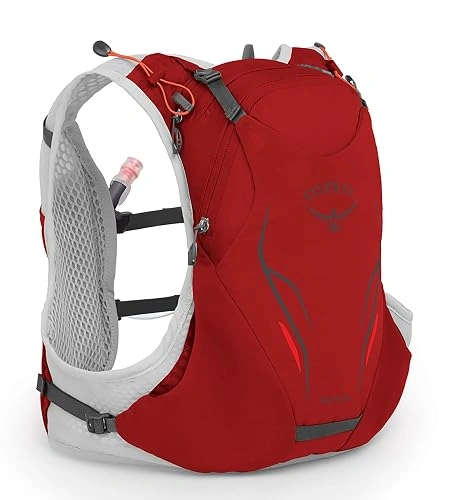
The Osprey Duro 6 is a six liter running vest sold here with a 1.5 liter reservoir, which makes it one of the more complete out-of-the-box packages in this comparison. The vest uses a stretchy, close-fitting design, and it carries its storage in a series of pockets across the front and back rather than one large bag.
That layout suits runners heading out for two to four hours on trails who want water on the back and quick access to snacks, a phone and a light layer. The six liter capacity leaves room for a jacket and a few essentials without turning the vest into a bulky pack.
The trade-offs are practical. Retailer listings describe the pocket count differently, and some Duro 6 listings are for versions without the reservoir, so check that the one you order includes it. A reservoir also means you drink through a hose, which some runners find less convenient than a front flask for refilling mid-run.
CamelBak Ultra Pro Running Hydration Vest 34oz
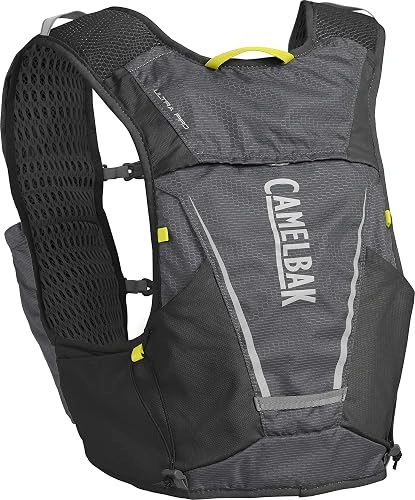
The CamelBak Ultra Pro is built around two Quick Stow flasks that together hold 34 ounces, roughly one liter, carried in front pockets within easy reach. Because the water sits at the chest, you can drink without reaching behind you, and you can see how much fluid is left at a glance.
CamelBak lists a six liter gear capacity and a large number of exterior pockets, plus a stretch overflow pocket, a phone pocket and trekking pole carry. Sizing is offered in small, medium and large against chest measurements, so you pick a size instead of relying on one-size adjustment.
This vest fits runners who prefer flasks to a bladder and want a snug, low-bounce feel for runs of a couple of hours or more. The main limit is fluid volume: one liter is enough for many runs but requires refills or an extra flask on hot, long, unsupported routes. Pocket count and weight are quoted differently across retailers, so rely on the manufacturer page for details.
Nathan QuickStart Hydration Pack Vest
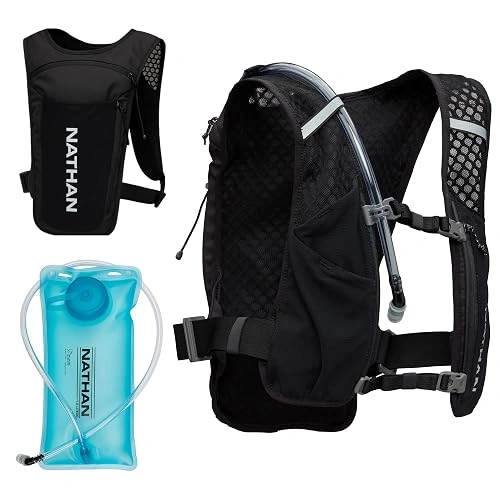
The Nathan QuickStart is a lightweight, entry-level style running vest whose listing says it works with either a bladder or flasks, so you can choose the drinking system that suits your run. That flexibility is its main strength, since you can start with one format and switch if your preference changes.
Nathan describes the QuickStart family as a simple one-size-fits-most design with adjustable front and side straps, a main back compartment, a small rear pocket and a front phone pocket. It is aimed at runners moving up from handhelds and belts who want modest storage rather than a full mountain kit.
The trade-off is capacity and extras. The vest offers less storage than six liter and twelve liter options, so it suits shorter long runs and road or light trail use better than all-day missions. Because the listing offers a choice of bladder or flasks, check carefully what is included in the version you order before relying on a particular setup.
CamelBak Circuit Run Vest with Hydration Bladder
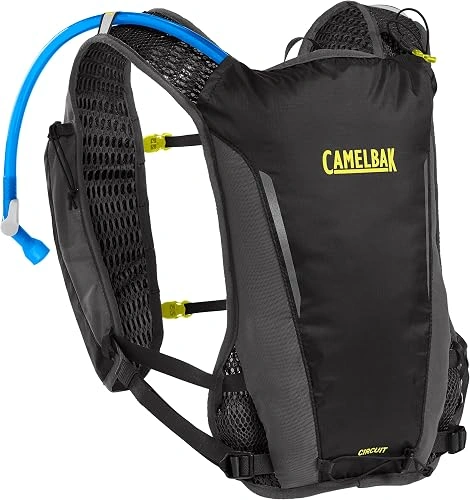
The CamelBak Circuit Run Vest pairs a vest-style harness with a Crux 1.5 liter reservoir, listed as 50 ounces, which is more fluid than the flask-based vests in this guide. The Crux reservoir uses a quick-link system for the hose, which makes it easier to detach for refilling and cleaning.
Because the water rides on your back, this vest suits runners who like to sip steadily through a hose and want a larger fluid supply for long road, trail or training runs. Compared with the lightest race vests it is a more everyday build, and listings give a pack weight noticeably higher than minimalist designs.
Be aware that retailers list different capacity and weight figures for older Circuit models and the current Run Vest, so confirm you are reading the right listing. A back-mounted reservoir also means you cannot see fluid levels while running, and adding front flasks is not the focus of this design.
Nathan Women’s Pinnacle Race Vest with 12L Hydration Pack
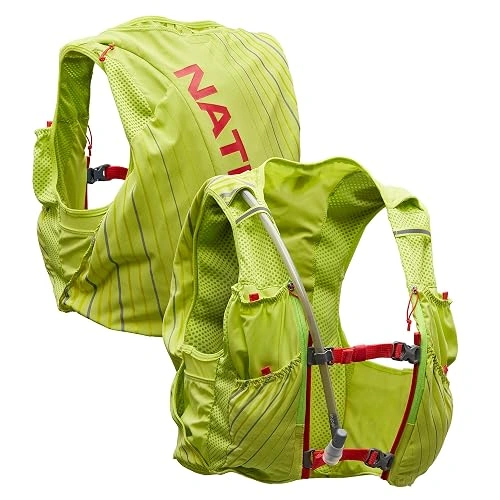
The Nathan Women’s Pinnacle is the biggest vest in this comparison, with a twelve liter capacity listed for the pack and a design shaped for women’s torsos. That volume gives room for layers, food, a headlamp and mandatory-gear style items that smaller vests cannot hold.
It is aimed at women running long trail races, ultras or full-day mountain outings where self-sufficiency matters more than minimal weight. Nathan’s Pinnacle series places soft flask pockets on the front and a bladder compartment on the back, so you can mix drinking options.
The cost of all that space is bulk. For a two hour run it will feel like more pack than you need, and a half-empty twelve liter vest can shift unless you tighten the straps. Specifications differ between Pinnacle versions and bladder sizes across listings, so check what is included with the exact one you order.
Conclusions
The Osprey Duro 6 is the strongest all-round pick here, combining six liters of storage with a 1.5 liter reservoir in one package. Choose it if you run trails for a few hours and want everything on one vest. … read more
The CamelBak Ultra Pro is a good match if you like front flasks and a snug, size-specific fit. Its one liter of fluid is the limit, so plan refills on longer routes. … read more
The Nathan QuickStart works well as a first running vest, with a bladder or flask option and simple adjustable straps. It offers less storage than the larger vests, so it suits shorter long runs best. … read more
The CamelBak Circuit Run Vest suits runners who want a bigger 1.5 liter back reservoir with a quick-link hose. Pick it for steady sipping on long outings, but note you cannot see the water level while moving. … read more
The Nathan Women’s Pinnacle is the choice for women who need twelve liters for race kit and layers. It is overkill for short runs, so buy it only if your distances call for the extra capacity. … read more
Frequently Asked Questions
Should I choose a hydration vest with a reservoir or soft flasks?
A reservoir, like the one with the Osprey Duro 6 or CamelBak Circuit, carries more fluid and is drunk through a hose. Flasks, as on the CamelBak Ultra Pro, sit at the chest so you can see and reach them easily but hold less.
How much storage space do I need in a running vest?
For runs of one to two hours, a small vest like the Nathan QuickStart is often enough. Six liters, as on the Osprey Duro 6 or CamelBak Ultra Pro, covers a phone, snacks and a light layer. Twelve liters, as in the Nathan Pinnacle, suits race gear and longer days.
Does the Osprey Duro 6 come with a reservoir?
The version in this guide is listed with a 1.5 liter reservoir. Some retailers sell Duro 6 versions with flasks or without a reservoir, so check the product title and contents of the exact listing before you order.
How should a running vest fit?
It should sit snug against your torso without restricting breathing, with straps adjusted so it does not bounce. The CamelBak Ultra Pro uses sizes based on chest measurements, while the Nathan QuickStart relies on adjustable straps in one size.
Is a big 12 liter vest suitable for shorter runs?
It can be used, but a large vest like the Nathan Pinnacle will feel bulky and can shift when only partly filled. Shorter runs are usually better served by a smaller vest such as the Nathan QuickStart or a six liter design.