
Best Table Tennis Paddles Compared for 2026: 5 Top Picks for Spin and Control
Best table tennis paddles compared: 5 ping pong rackets for improving players, with blade, rubber and handle notes. Read the guide and pick yours.
5 table tennis paddles compared on blade build, rubber, handle and control so improving players can pick the right step up
Once you can keep a rally going, the paddle that came in a basic set starts to hold you back. The rubber is thin on grip, the blade feels dead on a loop, and it is hard to tell whether a better racket would actually help or just cost more. Product pages are full of speed, spin and control numbers that rarely line up from one listing to the next.
This guide compares five paddles aimed at players who are past the beginner stage. Each one was judged on four criteria: blade construction, rubber and sponge, handle shape, and how well the overall design balances spin against control. Where a detail could not be confirmed from the maker or consistent listings, it was left out rather than guessed.
Below you will find a short overview of every paddle with who it suits and its honest trade-offs, a one-line best-for and not-for summary, final conclusions, an editor’s pick with the reason behind it, and answers to common questions about choosing your first serious racket.
| Product | Amazon rating | Best for | Link |
|---|---|---|---|
| STIGA Pro Carbon Plus Raptor Performance-Level Ping Pong Paddle ★ | ★ 4.6/5 (5,207) | Attacking loop players | View → |
| JOOLA Carbon Pro Professional Ping Pong Paddle with Carbonwood Technology | ★ 4.5/5 (2,042) | Fast all-round attackers | View → |
| PRO-SPIN Ping Pong Paddles ITTF Approved Professional Table Tennis Racket with Carbon Fiber | ★ 4.7/5 (7,377) | Carbon blade on a budget | View → |
| STIGA Apex Performance-Level Table Tennis Racket with ACS Technology | ★ 4.5/5 (503) | Control and stroke development | View → |
| Butterfly B501FL Shakehand Table Tennis Racket and Case Set China Series | ★ 4.5/5 (177) | Soft feel with case | View → |
STIGA Pro Carbon Plus Raptor Performance-Level Ping Pong Paddle
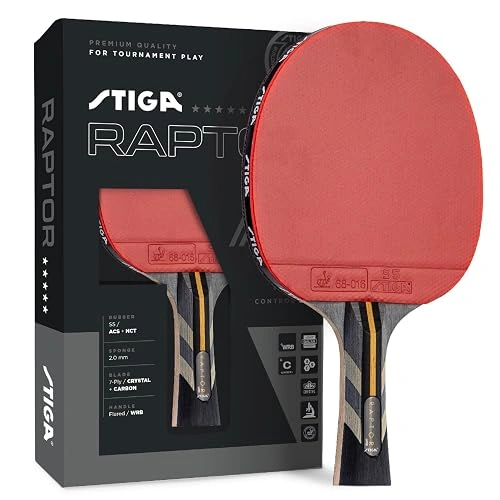
The Pro Carbon Plus Raptor is built around a 7-ply extra light blade, and listings describe the construction as balsa wood combined with carbon fiber layers. It is paired with a 2 mm sponge under ACS rubber, a STIGA technology that uses microscopic air capsules in the rubber to add elasticity. The handle is described as flared, a familiar shape for shakehand players who like a secure, slightly anchored hold.
Listings rate it very high for spin and speed and noticeably lower for control, which fits a carbon-reinforced blade with a lively response. It suits an improving player who has started to loop, drive and serve with real spin and wants a paddle that rewards a fuller stroke.
The trade-off is forgiveness. A fast carbon blade will send short, lazy blocks long, so players still working on touch and placement may find it less settled than a slower all-wood racket. Weight figures differ between listings, so check the number on the product page if balance matters to you.
JOOLA Carbon Pro Professional Ping Pong Paddle with Carbonwood Technology
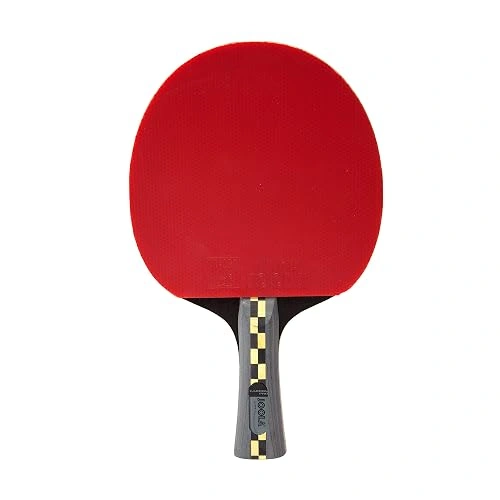
The Carbon Pro uses what JOOLA calls carbonwood technology, a carbon-infused wood blade, and listings give its rubber as 1.9 mm thick. That makes it a thinner-rubber setup than several rivals here, which usually means a little more feel for the ball at contact and a flatter, more direct response.
Listed ratings place it high on speed, solid on spin and better than average on control, so it sits between a pure attacking paddle and an all-round racket. It suits an improving player who wants a firm, quick blade without moving to a very fast one.
The trade-offs are mostly about information and age. Listings disagree about the handle shape and length, so it is worth confirming that before buying if grip comfort matters to you. It is also an older design, and the rubber will not give the heavy, grabby spin of the thicker-sponge carbon paddles in this guide. Players who want maximum spin on topspin loops may prefer a different pick.
PRO-SPIN Ping Pong Paddles ITTF Approved Professional Table Tennis Racket with Carbon Fiber
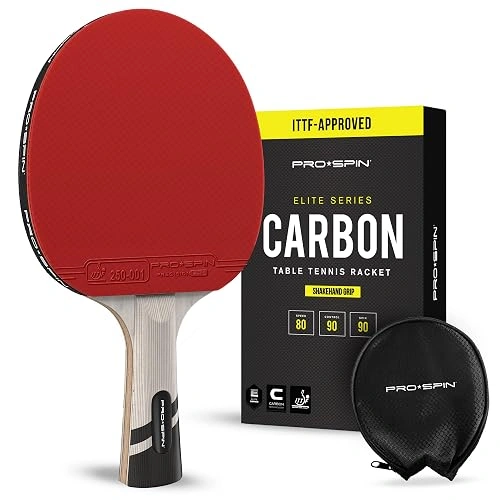
The PRO-SPIN racket is described in listings as a 7-ply blade that combines layers of wood with carbon fiber, topped with 2.0 mm sponge rubber. The seller states the rubber is ITTF approved, though that claim comes from sales listings rather than a registry entry we could confirm, so check it yourself if you plan to enter sanctioned events.
Item weight is commonly listed at about 6.5 ounces. On paper it is the closest match here to the Raptor, with a similar ply count and sponge thickness, but it comes from a smaller brand with less published technical detail on the blade and rubber.
It suits an improving player who wants a carbon-reinforced blade and a modern layered build without stepping up to a premium name. The trade-off is that specifications vary between listings, including whether the carbon sits throughout the blade or mainly in the shaft, so expectations should stay modest on exact feel. Buyers often mention that it offers plenty of spin for the category, but that is general feedback rather than a measured result.
STIGA Apex Performance-Level Table Tennis Racket with ACS Technology
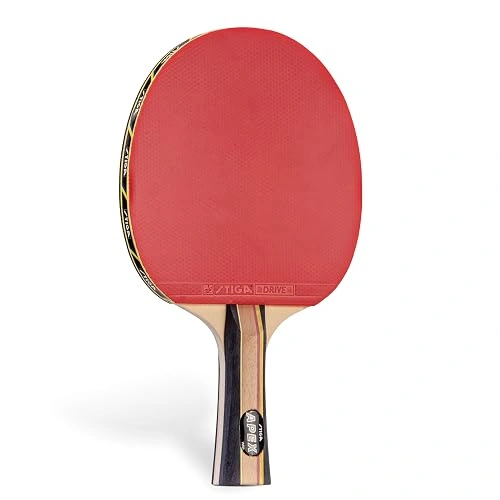
The Apex is STIGA’s control-oriented performance racket. It uses ITTF-approved drive inverted rubber with ACS technology, the microscopic air capsules in the rubber that are meant to add elasticity and stability. Review listings give it a lower speed rating than the carbon models here and a higher control rating, which matches its all-wood approach with no carbon layer.
That makes it a good fit for an improving player who is still refining stroke technique, placement and serve return. A slower blade gives more time to see the ball and shape the shot, and it forgives a late or incomplete swing better than a fast carbon paddle.
The trade-off is ceiling. As your strokes get faster and you want to finish points with hard loops, the Apex will feel limited next to a carbon blade, and it will not generate the same spin and pace. Some listings mix its blade details with those of a related STIGA model, so confirm the exact ply count on the product page before relying on it.
Butterfly B501FL Shakehand Table Tennis Racket and Case Set China Series
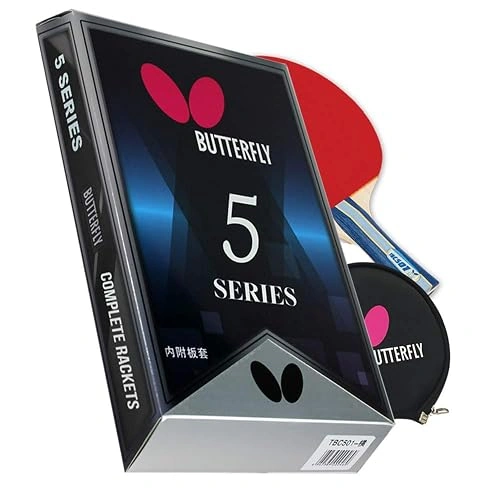
The Butterfly B501FL is a ready-made shakehand racket with a flared handle, sold together with a case. Butterfly describes the model as medium speed and spin with a softer feel, which is a clear departure from the stiff carbon paddles in this guide. Listings show matching speed and spin ratings and a somewhat lower control rating.
It suits an improving player who wants a respected brand name, a comfortable flared grip and a racket that is easy to live with in club play. The included case is a practical extra for anyone carrying the paddle to a rec hall.
The trade-offs are in the detail. Listings disagree on the sponge thickness, and a confirmed blade ply count for this exact model was not available, so the construction is best treated as a standard wood blade. It also lacks the carbon response of the top picks, which means less pace on fast attacking shots. It makes the most sense as a feel-first, softer paddle rather than a weapon for aggressive loops.
Conclusions
The STIGA Pro Carbon Plus Raptor is the strongest choice here for players who loop and drive, thanks to its 7-ply carbon and balsa blade, 2 mm sponge and ACS rubber. Expect a fast response that needs good touch to tame. … read more
The JOOLA Carbon Pro suits players who want a quick carbon-infused blade with a thinner 1.9 mm rubber for more direct feel. Check the handle shape before buying, since listings disagree, and expect less heavy spin than thicker-sponge rivals. … read more
The PRO-SPIN carbon fiber racket is the choice for buyers wanting a layered 7-ply carbon build from a smaller brand. Its ITTF claim comes from the seller, so confirm it first if you play sanctioned events. … read more
The STIGA Apex is the pick for players who value control while still building technique. Its ACS rubber and slower blade give time and forgiveness, but it will feel limited once your loops get faster and heavier. … read more
The Butterfly B501FL is a softer, feel-first option that comes with a case and a flared shakehand handle. It suits club players who prioritize comfort and brand reputation over the pace of a carbon blade. … read more
Frequently Asked Questions
What sponge thickness should an improving player look for?
Most paddles here use sponge around 2 mm, with one listed at 1.9 mm. That range balances spin and control well. Thicker sponge adds power but makes touch shots harder, so it is better saved for later.
Is a carbon blade better than an all-wood blade?
Carbon layers usually make a blade stiffer and faster, which helps attacking loops and drives. All-wood blades are slower and give more feel, so they suit players still developing technique and placement.
What does ACS technology mean in a STIGA paddle?
ACS refers to microscopic air capsules built into the rubber. STIGA describes them as adding elasticity and control. The Raptor and the Apex both use it, with the Raptor pairing it with a faster carbon blade.
Why do some listings disagree on paddle specs?
Sellers often copy details from similar models or round figures differently. Handle shape, ply count and sponge thickness vary between pages, so confirm the details that matter to you on the product page before buying.
Is a flared handle good for a shakehand grip?
A flared handle widens toward the base, which many shakehand players find secure in the hand. It is a matter of comfort and preference. The Raptor and the Butterfly B501FL both use flared handles, so those are good ones to compare.