

Best Weightlifting Belts Compared for 2026: 5 Top Picks for Heavy Lifts
Best weightlifting belts compared: five picks across neoprene, leather prong and lever styles, with width and thickness details. Find your belt today
5 weightlifting belts compared across neoprene, prong and lever designs so you can match width, thickness and closure to your lifting
Choosing a lifting belt is harder than it looks. Some are soft and flexible, some are stiff slabs of leather, and the buckle you pick changes how fast you can get in and out of the belt between sets. Pick the wrong style and you end up with a belt that digs in, slips, or sits in the gym bag because it is a hassle to adjust.
This guide compares five belts on the details that can be confirmed from their listings: material, width, thickness and closure type. We focus on those four criteria because they decide how a belt feels, how much firm surface it gives you to brace against, and how convenient it is to use from set to set.
Below you will find a short overview of each belt, who it suits and who should look elsewhere, then a final verdict for each and answers to common buyer questions.
| Product | Amazon rating | Best for | Link |
|---|---|---|---|
| Gymreapers Quick Locking Weight Lifting Belt 4 Inch Neoprene ★ | ★ 4.5/5 (8,238) | General strength training | View → |
| ProFitness 5mm Leather Weight Lifting Belt for Men and Women | ★ 4.7/5 (11,788) | Beginners moving to leather | View → |
| Genuine Leather Weightlifting Belt 4 Inch Wide with Double Prong Buckle | ★ 4.7/5 (24,939) | Traditional prong belt fans | View → |
| Sports Leather Weight Lifting Lever Belt 10mm for Powerlifting | ★ 4.4/5 (1,610) | Powerlifting squats and deadlifts | View → |
| Just Fitee Weightlifting Lever Belt 4 Inch 10-13mm | ★ 4.8/5 (8) | Heavy squats and deadlifts | View → |
Gymreapers Quick Locking Weight Lifting Belt 4 Inch Neoprene
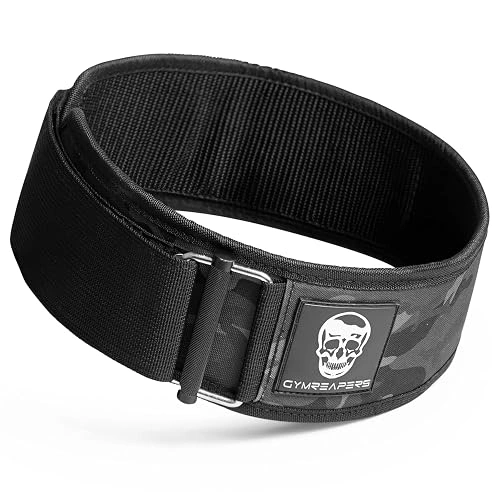
The Gymreapers Quick Locking belt is a 4 inch neoprene belt with a metal buckle, and the listing highlights the quick locking closure. That makes it a different proposition from the stiff leather belts in this group, since neoprene tends to be softer and easier to wear for long sessions that mix lifts with other work.
It suits lifters who want a wide belt that is simple to put on and take off, such as people training general strength, circuits or higher-rep sets who still want something to brace against at the midsection. The metal buckle and quick closure also appeal to anyone who dislikes fiddling with holes and prongs between sets.
The trade-off is rigidity. A neoprene belt is generally less stiff than a thick leather belt, so competitive powerlifters who want maximum firmness, or a belt that meets federation rules, will probably prefer a leather lever belt from the other options here.
ProFitness 5mm Leather Weight Lifting Belt for Men and Women
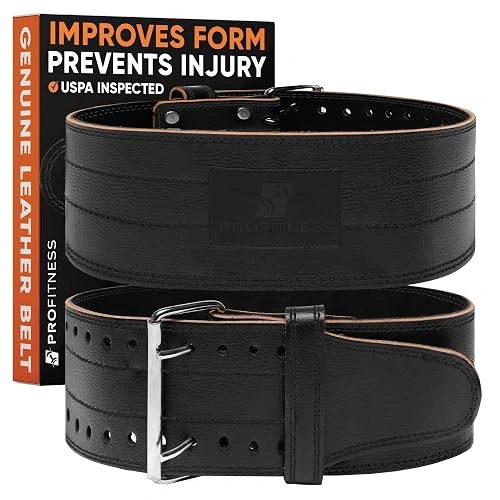
The ProFitness belt is a leather lifting belt listed at 5mm thick and marketed for both men and women. At 5mm it sits at the thinner end of leather lifting belts, which usually means it is easier to break in and more comfortable when you bend or sit in a squat than a thicker slab.
It suits newer lifters, or anyone moving up from a soft neoprene belt who wants the firmer feel of leather without committing to a heavy, rigid belt. It also makes sense for people who train a mix of squats, deadlifts and presses and want something less bulky than a competition-style belt.
The compromise is the same one that comes with any thinner leather belt. It gives less rigid support than a 10mm or 13mm belt, so lifters chasing maximum stiffness for heavy singles may outgrow it. Buyers choosing between sizes should check the listing size chart carefully before ordering.
Genuine Leather Weightlifting Belt 4 Inch Wide with Double Prong Buckle
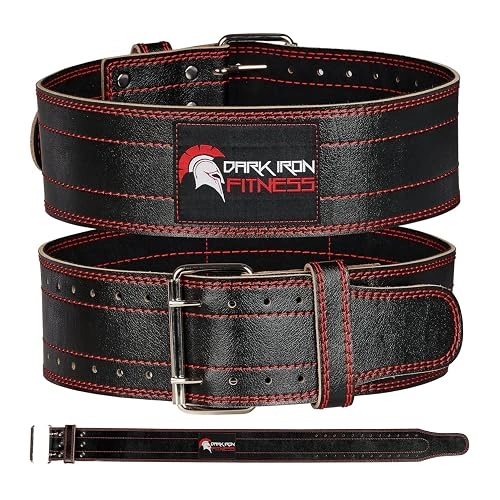
This unbranded belt is made of genuine leather, is 4 inches wide, and uses a double prong buckle with reinforced stitching, according to the listing. The double prong closure is the traditional approach: you thread the strap through the buckle and push the prongs into the holes, which gives a secure hold once set.
It suits lifters who like the classic leather belt feel and are happy to set their tightness once and leave it. The 4 inch width gives a broad band to brace against, and the reinforced stitching points to a belt built for regular use rather than occasional wear.
The downside is speed. Prong buckles take longer to adjust than a lever or quick-lock closure, and tightness is limited to the spacing of the holes. Because the listing title does not name a brand, buyers who care about a known manufacturer or detailed thickness specs may want to look at the other leather options here.
Sports Leather Weight Lifting Lever Belt 10mm for Powerlifting
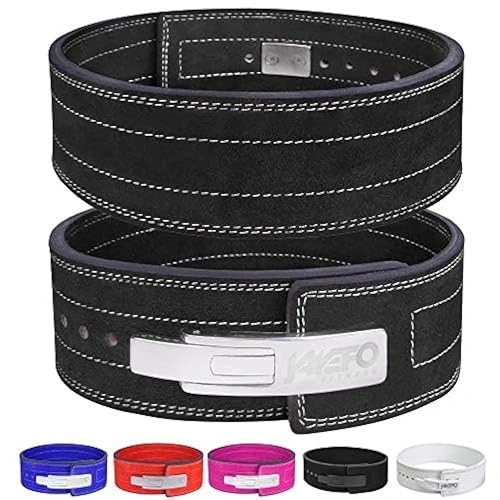
This leather lever belt is listed at 10mm thick and is aimed at powerlifting, with the title mentioning an IPF buckle. A lever closure lets you set the tightness once and then flip the lever open and shut, which makes it quick to remove between sets and gives a consistent fit every time you close it.
It suits lifters focused on squats and deadlifts who want a thick, stiff belt to brace against and who may compete or train in a powerlifting style. The 10mm thickness is a common choice among strength athletes looking for a firm band.
The trade-offs are the usual ones for a thick leather lever belt. It needs a break-in period, feels bulky for movements with a lot of torso flexion. The listing title does not give a brand name, and anyone entering a federation meet should confirm that rules match the belt before relying on it.
Just Fitee Weightlifting Lever Belt 4 Inch 10-13mm
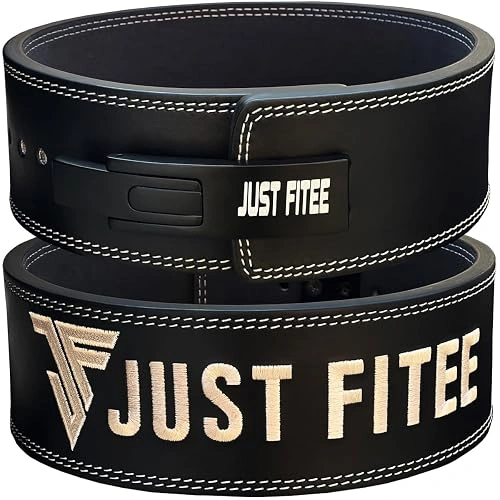
The Just Fitee belt is a 4 inch lever belt with a listed thickness of 10-13mm and a stainless steel lever buckle. Like other lever designs, it allows fast on-and-off use while keeping the same tightness every time, and the stainless steel hardware is a sensible match for a belt that sees heavy use.
It suits strength lifters who want a thick, stiff belt for heavy squats and deadlifts and prefer the convenience of a lever over a prong. The width and thickness give a substantial surface to brace against, which is what many lifters look for when stepping up from a thinner belt.
The trade-off is that a belt in this thickness range is rigid and takes time to break in, and it can feel bulky for lifts that involve a lot of bending. The thickness is also given as a range, so buyers who want a specific figure should confirm it in the listing details before ordering.
Conclusions
The Gymreapers Quick Locking belt is the easiest pick to live with. Its 4 inch neoprene build and quick locking metal buckle make it fast to use and comfortable for general training, though it is less rigid than thick leather for maximum-effort lifts. … read more
The ProFitness 5mm leather belt is a solid step up for lifters leaving neoprene behind. It offers the feel of leather at a thinner, easier-to-wear 5mm, but it will not give the stiffness of the 10mm and 13mm belts in this comparison. … read more
The Genuine Leather Weightlifting Belt with a double prong buckle is a good fit if you want the classic leather feel at 4 inches wide. Expect slower adjustment than a lever, and note that the listing names no brand. … read more
The Sports Leather Weight Lifting Lever Belt at 10mm is aimed squarely at powerlifting, with a lever closure and a title that references an IPF buckle. It is stiff and quick to fasten, but bulky for general training and brandless in the listing. … read more
The Just Fitee Weightlifting Lever Belt pairs a 4 inch width with a listed 10-13mm thickness and a stainless steel lever buckle. It is a strong choice for heavy squats and deadlifts, but expect a stiff break-in and a thickness given as a range. … read more
Frequently Asked Questions
Is a lever belt or a prong belt better for lifting?
A lever belt is faster to put on and take off and gives the same tightness each time, which many powerlifters like. A prong belt takes longer to adjust and is limited to hole spacing, but it is simple and traditional. Choose based on how often you adjust.
What thickness of lifting belt should I choose?
Thicker belts, such as the 10mm and 10-13mm options here, are stiffer and give a firmer surface to brace against but take longer to break in. A 5mm leather belt is easier to wear and more flexible, which suits newer lifters or mixed training.
Is a neoprene belt as good as a leather belt?
They serve different needs. Neoprene is generally softer and more comfortable for long sessions, while leather is stiffer and gives a firmer surface to brace against. For heavy squats and deadlifts many lifters prefer leather, while neoprene suits general training.
Does a 4 inch wide weightlifting belt fit everyone?
A 4 inch width is common, but fit also depends on your torso length and the belt size you order. Shorter lifters may find a wide belt presses against the ribs or hips, so check the listing size chart and measure your waist before buying.
Do lever belts need a break-in period?
Thick leather lever belts, such as the 10mm and 10-13mm belts compared here, are stiff and usually need some wear before they feel comfortable. Buyers often mention that early sessions feel bulky, especially in lifts with a lot of torso bending.